
Free Referral Service — St. Lucie County, Florida
Water Damage In St. Lucie County, FL
Water damage in St. Lucie County, FL is a coastal story: 360,500 residents live along the Indian River Lagoon and the Atlantic shore, on low ground where Fort Pierce — the county seat — records 55.89 inches of rain in an average year. When that water gets inside, one free call connects you with an independent local pro.
Free Call · Answered 24/7 · Local Pros Near You
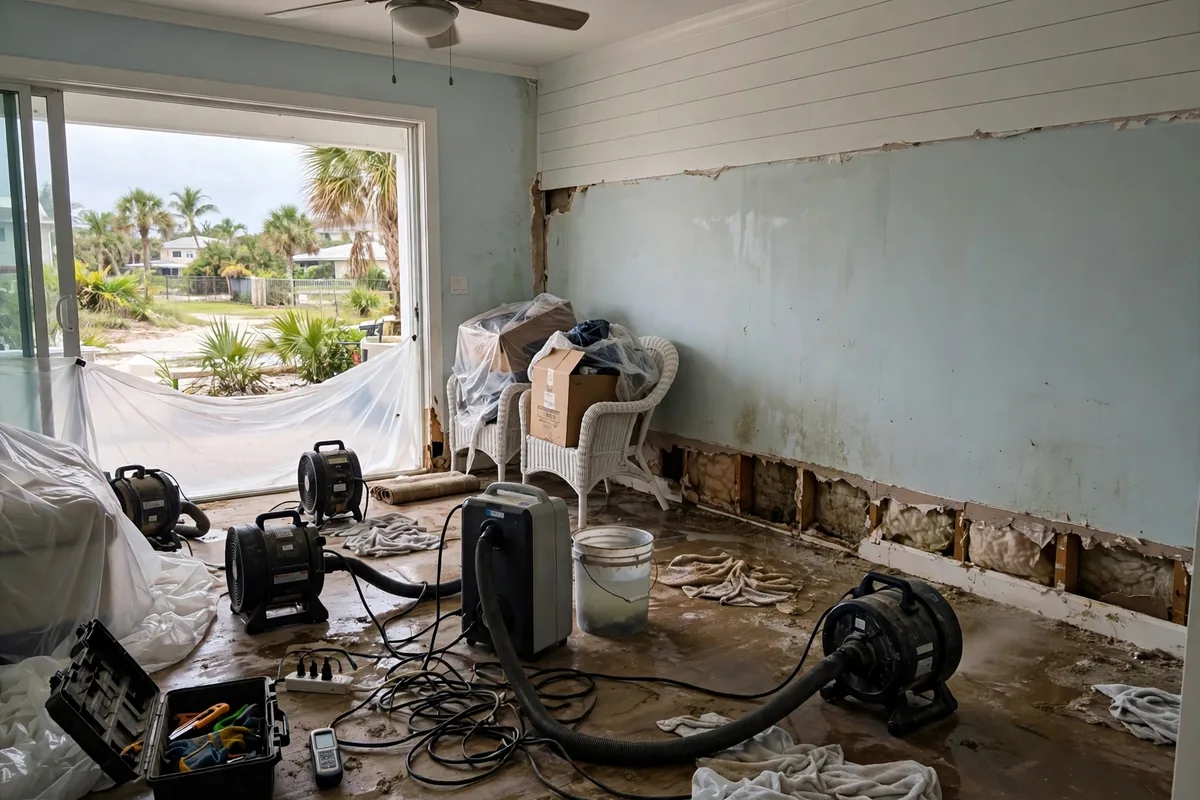
Quick Answer: St. Lucie County water comes from three directions: storm surge and lagoon water pushed in during tropical storms, heavy rain that low ground drains slowly, and indoor leaks — 44.0% of Fort Pierce homes were built before 1980, per the U.S. Census Bureau. About half of Fort Pierce homes are renter-occupied, so belongings are at risk. If your home is wet now, one free call connects you with an independent local pro who can typically arrive in 30–60 minutes.
St. Lucie County At A Glance
How Do The Coast And The Lagoon Drive Water Damage Here?
St. Lucie County's water damage is driven by its geography: the Indian River Lagoon — the long, shallow coastal lagoon running along Brevard and St. Lucie counties — on one side, the open Atlantic on the other, and flat, low land in between. The Fort Pierce survey point sits just 19.7 feet above sea level (USGS), so there is little height to protect homes when water rises.
During the Atlantic hurricane season, a passing hurricane can push storm surge — sea water driven inland by storm winds — into the lagoon and over low shoreline streets, while rain bands trigger flash flooding miles from the beach at the same time. The National Hurricane Center issues the watches and warnings, and NOAA rainfall normals show how much water the county handles even in calm years: about 55.89 inches annually at Fort Pierce.
FEMA's flood maps for the Fort Pierce area include zone VE — the highest-risk coastal zone, where wave action adds force to flood water — alongside zones A, AE and AH. Homes do not need to be on the beach to flood here; lagoon-side and low inland streets take water in a strong storm too.
What Do Fort Pierce's Older Homes And Many Renters Mean For Damage?
Fort Pierce pairs an older housing stock with an unusually high share of renters, and both facts shape its water damage. U.S. Census Bureau figures put the city's median home at 1982, with 44.0% of its 22,871 homes built before 1980 and only 49.5% owner-occupied — roughly half the city rents.
Older homes here typically rest on a concrete slab, and four decades of Florida humidity work on the plumbing inside them: supply lines, water heaters and AC drains are the everyday leak sources, and slab leaks can run under floors for weeks before a stain or a bill spike gives them away. Wet materials left alone grow mold fast in this climate — mold growth on damp drywall can begin within 24 to 48 hours — so speed matters more than in drier states.
For renters, one distinction decides who loses what: a landlord's insurance covers the building, not a tenant's furniture and belongings. Ground-floor renters near the lagoon should know their FEMA flood zone AE status — the mapped high-risk zone with a 1 percent annual flood chance — and keep photos of what they own, because documentation is what a claim runs on.
How Does The Referral Work In St. Lucie County?
We are a referral service, not the company that does the drying: one free call connects you with an independent local water damage pro serving St. Lucie County, and that pro inspects, explains and does the work. The call itself is free, around the clock, and you are never obliged to hire.
Tell us where the water is and where you think it started. The connected pro can typically arrive in 30–60 minutes, check the damage with moisture meters, and lay out the structural drying plan — the planned drying of walls, floors and framing — before quoting their own price for the job.
Our detailed local coverage in this county is Fort Pierce, which is also the county seat: its city page carries the neighborhoods, ZIP codes and local data. Elsewhere in St. Lucie County, call and ask — if no pro in our network covers your address, we will say so honestly rather than keep you waiting.
Cities We Serve In St. Lucie County
Related Services We Offer
St. Lucie County Water Damage Questions
Water In Your Home Right Now?
One free call connects you with an independent local pro who can typically arrive in 30–60 minutes.
Free Call · Answered 24/7 · Local Pros Near You