
Free Referral Service — Ormond Beach, Florida
Water Damage In Ormond Beach, FL
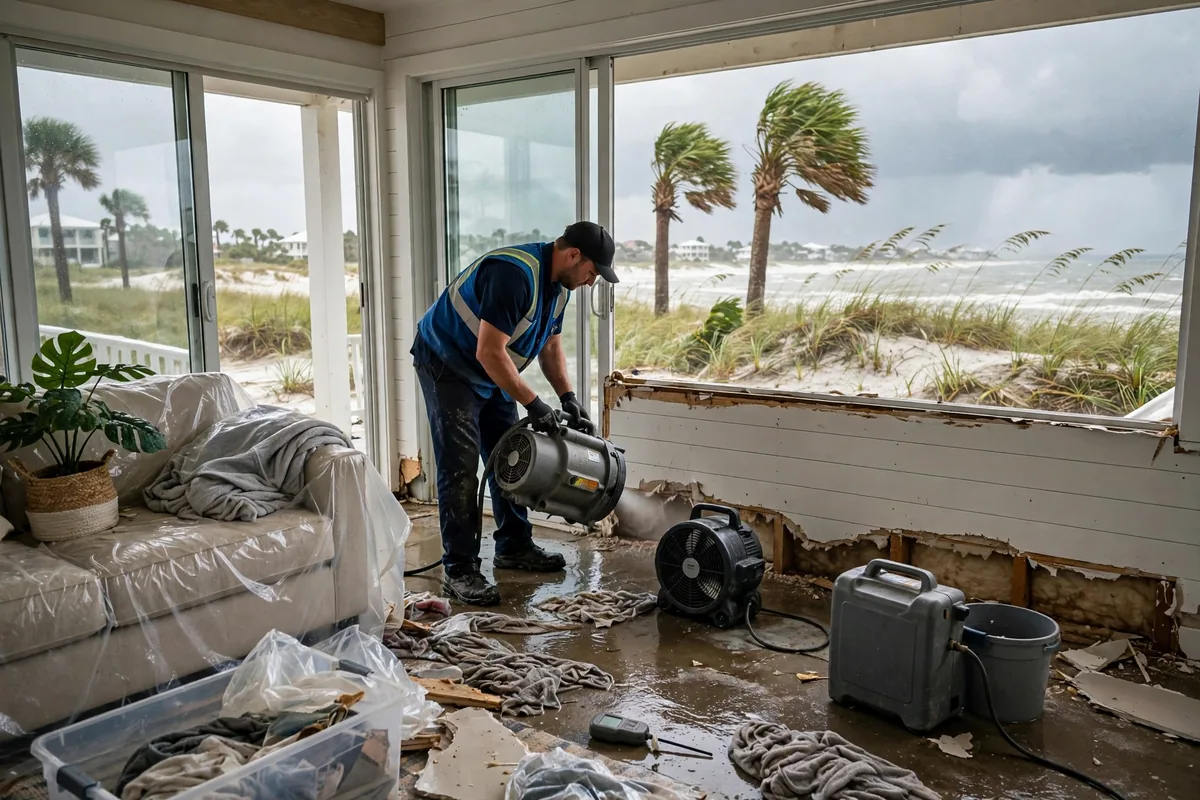
Water damage in Ormond Beach, FL comes from two directions: the Atlantic on the beachside and the Halifax River on the mainland, with five flood zones in one small city. When a pipe bursts or storm water gets in, one free call connects you with an independent local pro who can typically arrive in 30–60 minutes.
Free Call · Answered 24/7 · Local Pros Near You
Quick Answer: Ormond Beach's 43,976 residents live in 21,837 homes, and 41.5% of those homes were built before 1980 — compared with 34.0% statewide (U.S. Census Bureau, ACS 2024). Uniquely on our list, five flood zones are mapped here — A, AE, AH, VE and X — and 79.2% of homes are owner-occupied, the 4th highest share of the 19 Florida cities we serve. One free call connects you with an independent local pro who can typically arrive in 30–60 minutes.
Do I Have This Problem?
Tap every sign you see at home. This is a guide, not a diagnosis — only a pro can confirm the problem.
Ormond Beach At A Glance
How Ormond Beach Compares
Rankings are among the 19 Florida cities we serve. Sources: U.S. Census Bureau ACS 2024 5-year estimates; NOAA 1991–2020 Climate Normals. Method: each city is ranked 1 = highest (median year built: 1 = oldest) from data/cities.csv — see the sources list at the bottom of this page.
How Do The Beachside And The Mainland Differ In Water Risk?
The split is the story: beachside faces the ocean directly, the mainland faces the Halifax River and low inland ground, and each side floods differently. Five federal flood zones are mapped here — A, AE, AH, VE and X — the widest mix of the 19 Florida cities we serve.
Beachside, the defining hazard is a FEMA flood zone VE — the coastal zone where breaking waves add force to flood water — plus storm surge, the seawater a hurricane pushes ashore. Mainland, a FEMA flood zone AE area — high-risk land with a set base flood elevation — lines the river, and AH areas collect shallow ponding. Inland streets sit mostly in lower-risk X, where the everyday threat is plumbing. Check your parcel at msc.fema.gov; a homeowners policy excludes rising water, and the National Flood Insurance Program (NFIP) policy that covers it takes about 30 days to begin.
What Are The Signs Of Water Damage In An Ormond Beach Home?
The signs start small: a ceiling stain after a storm, a musty smell in the guest room, trim that no longer sits flat. None of them stay small — mold growth can start in 24-48 hours on damp material, so a stain noticed this week deserves a decision this week.
- Water stains, or paint bubbling and peeling on a wall or ceiling
- A musty odor with no visible water — the classic fingerprint of a leak inside a wall
- A baseboard — the trim at the foot of the wall — swollen, soft or pulling away
- Hardwood flooring that cups, or tile and grout lines that darken and stay dark
- A water bill that jumps, or a meter that keeps turning with every tap closed
What Causes Most Water Damage In Ormond Beach?
Plumbing starts most of it, with storm-driven roof leaks close behind. With 41.5% of homes built before 1980, plenty of original piping is still in service.
Aging cast iron drain pipe corrodes from the inside until it cracks under the slab, and pipe corrosion thins copper lines until a pinhole sprays inside a wall. A slab leak — a leak in a pressurized line under the concrete slab, the poured base of the house — often shows as a warm patch of floor or a stubborn water bill. Appliances follow: a water heater rusting through, a washer hose letting go. An AC condensate overflow — the air handler's drain line clogging until the pan spills — is the slow leak most often mistaken for a roof leak. And a sewage backup is always an emergency: Category 3 water, grossly contaminated.
How Do Hurricanes, The River And Summer Rain Behave Here?
Ormond Beach averages 51.25 inches of rain a year (NOAA 1991–2020 normals, Daytona Beach Intl AP station) — among the drier totals of the 19 Florida cities we serve — but it arrives in bursts, and the hazard is where it goes.
In Atlantic hurricane season, June to November, a hurricane offshore stacks three risks: surge on the beachside, wind-driven rain — rain blasted sideways into roof edges and vents — across the city, and the Halifax River rising against its banks. Flash flooding follows a cloudburst on wet ground, and the high water table keeps slabs damp from below. Two homes sharing ZIP 32174 or 32176 can face completely different water.
How Does A Pro Find Water That Has Spread Out Of Sight?
By measuring, not by tearing things apart on a guess: a moisture survey maps the real footprint of the water, so drying and removals are limited to what is actually wet.
A moisture meter reads the water content inside a material, and moisture mapping means recording those readings on a sketch of the home, so everyone sees the wet boundary. A thermal imaging camera adds the picture: damp drywall and subfloor — the layer under the finished floor — show as cooler patches tracing the leak's path. Checks repeat as daily monitoring until each material reaches its dry standard — the level of the same material in an unaffected room.
How Is The Home Dried, And What Do The Water Categories Change?
Drying runs in a set order — remove the water, dry the structure in place, then clean and treat — and the category decides how much material can be dried at all.
Extraction comes first. Structural drying — drying the home's materials where they stand — follows with an air mover sweeping air across wet surfaces and an LGR dehumidifier condensing moisture out of the air; antimicrobial treatment — a cleaning step that suppresses mold and bacteria — closes the job. Categories sort the water: Category 1 is clean supply water; Category 2 is gray water with soil or chemicals; Category 3 — sewage and flood water — is contaminated, and porous materials it soaked, like carpet pad and insulation, are usually removed. Drywall wicks water above the visible line; hardwood flooring may recover if drying starts fast; tile and grout can hide water traveling underneath across a slab-on-grade home. Air-drying alone is unreliable — humidity keeps materials damp.
Your safe first steps are simple: shut off the water at the main valve if you can reach it safely, keep clear of standing water near outlets, and move dry belongings out of the wet rooms while you wait for the pro.
What Should You Do First, And What Is Better Left Alone?
Stop the water, keep people safe, document, and call. If plumbing is the source, close the main water shutoff, the valve that stops all water entering the house, typically near the meter.
The hazards are real. Do not walk through standing water touching outlets, appliances or a panel, and keep bare skin out of sewage or river water inside the home. A ceiling holding water sags before it falls — treat a bulging ceiling as a no-go area.
What not to do yourself: never run a household vacuum on water — the shock risk is serious. Do not aim household fans at contaminated water, which spreads contaminants. And resist tearing out wet drywall or flooring on day one: removing materials that cannot be saved is part of the pro's sequence, after photos and readings. Photograph each room instead, and lift dry belongings to a dry area.
Which Areas And Homes Should Watch Closest?
Start with the water's edge: beachside streets near the VE zone watch the ocean, riverfront and low mainland pockets watch the Halifax River. Farther west, the pattern flips to plumbing — the older subdivisions' original drains and supply lines are the main threat.
Plantation Bay, the city's best-known neighborhood, is a gated golf community built around Plantation Bay Golf & Country Club in ZIP 32174; its newer homes mostly call about appliance leaks and AC overflows. The Trails, Tomoka Oaks and Ormond Lakes are mature mainland neighborhoods where cast iron drains are aging; Halifax Plantation, Hunters Ridge and Breakaway Trails sit inland, where ponding replaces tide as the worry.
Ownership shapes the response: 79.2% of homes here are owner-occupied — 4th highest of the 19 Florida cities we serve, versus 67.6% statewide — so most decisions fall to the homeowner.
How Should You Document Damage For A Claim?
Build the claim file as you go: insurers pay on evidence, and the clearest evidence exists in the first hours.
Take dated photos of every wet room, close-ups of the source if visible, and pictures of damaged belongings. Keep the pro's records — the moisture map, daily readings proving the dry standard was reached, and the scope of work. Save receipts, and keep removed materials until the adjuster releases them. If the water rose from the river, ocean or street, say which at the first call — rising water belongs to a flood policy.
Related Services We Offer
Water Getting Worse Right Now?
Standing water, a burst pipe or sewage cannot wait. See what to do first — and call now.
Neighborhoods We Serve In Ormond Beach
Plantation Bay
Plantation Bay is a gated golf community built around Plantation Bay Golf & Country Club (Adams Cameron).
Breakaway Trails
A named neighborhood inside Ormond Beach, in ZIP 32174.
Halifax Plantation
A named neighborhood inside Ormond Beach, in ZIP 32174.
Hunters Ridge
A named neighborhood inside Ormond Beach, in ZIP 32174.
Ormond Lakes
A named neighborhood inside Ormond Beach, in ZIP 32174.
The Trails
A named neighborhood inside Ormond Beach, in ZIP 32174.
Tomoka Oaks
A named neighborhood inside Ormond Beach, in ZIP 32174.
Neighborhoods we serve include:
- Breakaway Trails
- Halifax Plantation
- Hunters Ridge
- Ormond Lakes
- Plantation Bay
- The Trails
- Tomoka Oaks
What Happens When You Call
You Call — It’s Free
One free call, answered 24/7. Tell us where the water is and what happened. There is no charge for the call and no obligation to book anything.
We Connect You With An Independent Local Pro
We match your call with an independent local water damage professional who serves your area — a separate local business, not our own crew.
The Pro Calls You Back Or Visits To Check The Problem
The pro can typically arrive in 30–60 minutes to check the problem in person, measure the moisture and explain the next steps before any work begins.
Why Ormond Beach Homeowners Make One Free Call First
This is a referral service, not a drying company: one free call connects you with an independent local water damage pro who will inspect the problem and do the work. We do not send our own crew, and we do not set the pro's prices — your arrangement is directly with them.
In a city split between the beach and the river, the first need is someone local who can come and measure what is wet. The responding pro can typically arrive in 30–60 minutes, at any hour, and the call itself is free, with no obligation.
What Homeowners Say
Reviews shown exactly as given to us (name, city, words) — we do not edit them.
“Honest and dependable. They assessed water intrusion after a coastal squall and advised me on exactly what needed removal versus what was salvageable. Saved me thousands.”
Stephanie E. · Daytona Beach, FL
“A clogged HVAC condensation drain flooded our ceiling and hallway. They dried the attic insulation and hallway walls before any mold could form.”
Kimberly F. · Sanford, FL
“Very professional operation. They worked directly with my homeowner insurance adjuster, providing moisture logs and thermal photos that sped up payment.”
Timothy G. · Palm Bay, FL
ZIP Codes We Serve In Ormond Beach
Ormond Beach ZIP codes we serve: 32174, 32176. If your ZIP is not listed, call and we will confirm coverage.
Ormond Beach Water Damage Questions
Related Guides
Hurricane Season: Prepare Your Home For Water Damage
Guide — hurricane season water damage preparation
How Long Does Water Damage Restoration Take?
Guide — how long does water damage restoration take
Flood Insurance In Florida: Why Homeowners Insurance Is Not Enough
Guide — flood insurance florida homeowners
Reviewed By Hamza
Role: CEO
Hamza is the CEO of this business. He is very expert in local business and has great experience.
Updated October 23, 2026
Sources
Water In Your Home Right Now?
One free call connects you with an independent local pro who can typically arrive in 30–60 minutes.
Free Call · Answered 24/7 · Local Pros Near You