
Free Referral Service — Miami-Dade County, Florida
Water Damage In Miami-Dade County, FL
Water damage in Miami-Dade County, FL starts with the ground itself — porous limestone under almost everything. Miami-Dade County is the most populous county we serve — 2,738,356 people — built on low limestone between Biscayne Bay and the Everglades. Our local page covers North Miami Beach, where the oldest housing of any city we serve meets the heaviest rainfall in our data. One free call connects you with an independent local pro there.
Free Call · Answered 24/7 · Local Pros Near You
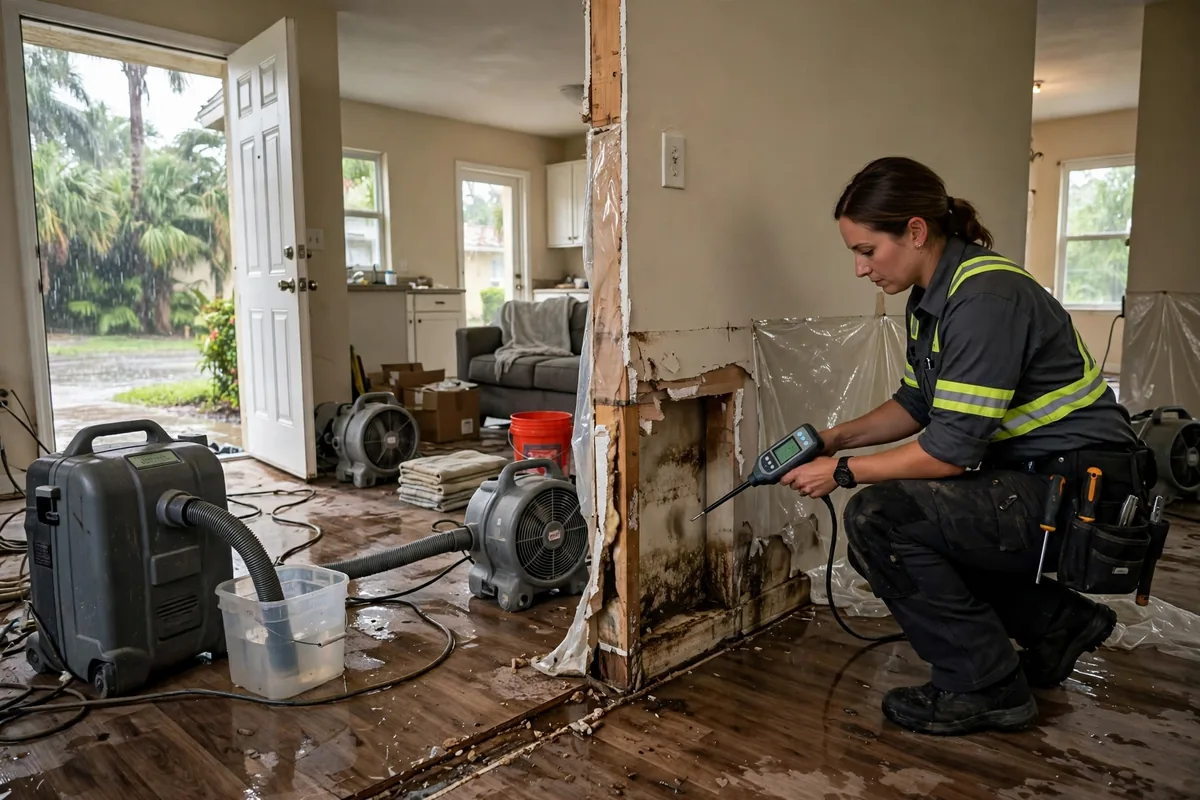
Quick Answer: Miami-Dade County water damage is a year-round problem: the North Miami Beach station averages 68.33 inches of rain a year (1991–2020 climate normals), the ground is low, and much of the housing is old — 80.6% of North Miami Beach homes predate 1980. Storm surge and canal flooding add the seasonal risk. One free call connects you with an independent local pro who can typically arrive in 30–60 minutes.
Miami-Dade County At A Glance
Why Is Water Damage A Year-Round Problem In Miami-Dade County?
Miami-Dade County combines three ingredients for water damage: very heavy rain, very low ground, and canals cut through almost every community to drain it. When rain falls faster than the canals and pumps can move it, flash flooding — sudden street and ground-floor flooding — follows, and the county's porous limestone lets a high water table (groundwater close to the surface) push moisture up through slabs between storms.
The seasonal peak is the Atlantic hurricane season, June 1 to November 30. The National Hurricane Center (NOAA's center for hurricane tracking and warnings) sits in Miami itself, and its forecasts drive the county's preparations when a hurricane — a tropical storm with winds of 74 mph or more — threatens storm surge, the sea water a storm pushes into bays, canals and coastal streets. The Florida Division of Emergency Management (Florida's storm preparation and recovery agency) coordinates with the county when evacuation and shelter decisions are made.
Yet most weeks, the calls are smaller and closer to home: an AC condensate line clogging in the humidity, a supply line letting go in an older home, a flat roof ponding after an afternoon storm. NOAA's normals for the North Miami Beach station — 68.33 inches of rain a year — mean even those small failures happen in a climate that keeps everything damp, so small leaks become mold problems faster here than almost anywhere.
Why Are North Miami Beach Homes At Higher Risk Than Most?
North Miami Beach, our Miami-Dade County service city, has the oldest housing profile of the 19 Florida cities we serve: a median build year of 1967 and 80.6% of homes built before 1980 — the highest pre-1980 share on our list, against a Florida state value of 34.0% (U.S. Census Bureau, ACS 2024 5-year estimates). Decades-old plumbing and drains are simply the most common starting point for the city's water damage.
The setting adds to it. The city survey point sits just 8.9 feet above sea level, FEMA flood maps show FEMA flood zone AE — the high-risk zone with a 1% annual flood chance and a calculated flood level — across the mapped hazard area, and only 52.2% of homes are owner-occupied, so renters fill much of the city. A renter may not know a building's plumbing history, which makes early signs — a musty smell, a bubbling paint patch — worth acting on immediately.
Homes here are built on a concrete slab (the poured concrete base under most Florida houses), so water from a slab leak or a flood spreads under flooring and into wall bases, feeding mold growth that can start within 24 to 48 hours. Pros answer with structural drying — equipment-driven drying of the walls and floors, verified with daily moisture readings — because Miami-Dade's humidity defeats open windows and patience.
How Does The Referral Work In Miami-Dade County?
We are a free referral service — you make one free call, tell us once what is happening, and we connect you with an independent local water damage pro. We are not the contractor: the pro who responds inspects your home, explains the drying plan and sets their own prices, and you choose whether to go ahead.
Our detailed local coverage is North Miami Beach (43,898 residents), in the county's northeast. A pro connected through the service can typically arrive in 30–60 minutes. Miami-Dade is a big county — if you are elsewhere in it, including Miami, the county seat, call and ask; we will tell you honestly whether a network pro covers your address, at no charge.
One practical note for this county: during a declared storm emergency, follow county evacuation and safety instructions first — property drying waits until you and the pro can safely reach the home. A free call early, even before a storm makes landfall, still helps: it puts your address in line for the first safe visit.
Cities We Serve In Miami-Dade County
Related Services We Offer
Miami-Dade County Water Damage Questions
Water In Your Home Right Now?
One free call connects you with an independent local pro who can typically arrive in 30–60 minutes.
Free Call · Answered 24/7 · Local Pros Near You