
Reviewed By Hamza · CEO · Updated October 23, 2026
Renters And Water Damage: Who Pays For What
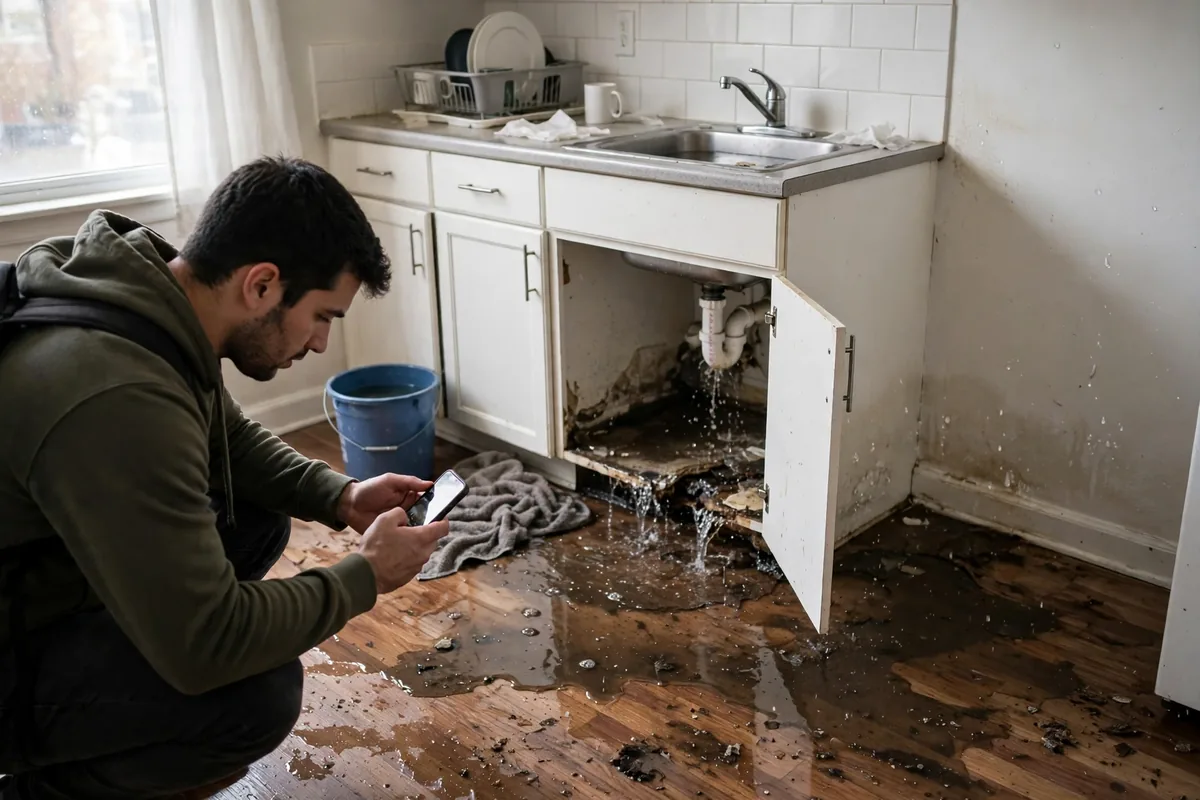
If you rent in Florida and water just damaged your apartment or rental home, the question comes fast: does renters insurance cover water damage — and who pays for the rest? The short answer is that the landlord usually pays for the building itself, while your own belongings are your responsibility, and your renters policy — if you have one — is what protects them. The details depend on where the water came from and what your lease says. This guide walks through what renters insurance typically covers, what it does not, what to do in the first 48 hours, and who pays for drying and repairs in the cases Florida renters see most.
In This Guide
- The Short Answer: The Landlord Covers The Building, You Cover Your Belongings
- Does Renters Insurance Cover Water Damage To Your Belongings?
- Your First 48 Hours As A Renter: A Checklist
- Who Pays For Drying And Repairs In Common Cases?
- Florida Rules Renters Should Know
- Why The First 24 To 48 Hours Matter For Mold
- When To Call A Pro — And How The Free Referral Call Works
The Short Answer: The Landlord Covers The Building, You Cover Your Belongings
In most rentals, the landlord pays for the building and its fixed parts, and you pay for your own belongings — unless your lease or the cause of the damage says otherwise. The landlord's insurance covers the structure: walls, flooring, and the concrete slab, the thick concrete floor most Florida homes sit on. Your furniture, clothes, and electronics are not covered by the landlord's policy at all.
This split surprises many renters, because it means a burst pipe — a pressurized water pipe splitting and releasing a large amount of water — can leave the landlord paying to repair drywall while you pay to replace a soaked sofa. That is exactly the gap renters insurance exists to fill. In rental-heavy Florida cities the question comes up constantly: in North Miami Beach only 52.2% of homes are owner-occupied, and in Lake Worth Beach only 45.9% are (ACS 2024), so nearly half of households in those cities are renters working out who pays.
Does Renters Insurance Cover Water Damage To Your Belongings?
Renters insurance typically covers your belongings when water damage is sudden and accidental — a pipe that bursts, a failed water heater, or an appliance leak from a washing machine or dishwasher hose. It typically does not cover flood water that rises from outside, and it usually does not cover slow leaks that dripped for weeks, because those are treated as maintenance problems rather than sudden events.
The flood distinction matters most in Florida. If storm water or rising groundwater enters your rental, a standard renters policy usually will not pay for your belongings. Flood coverage is separate: renters can buy a contents-only flood policy through the National Flood Insurance Program (NFIP), FEMA's flood insurance program — FEMA is the Federal Emergency Management Agency, which runs the program and publishes flood maps. Some landlords carry building policies with Citizens Property Insurance Corporation, Florida's state-created insurer of last resort, but that covers the landlord's building, never your belongings. Check your own policy wording for the exact list of covered events, because limits and deductibles vary.
Your First 48 Hours As A Renter: A Checklist
In the first 48 hours, do four things: tell your landlord in writing, document everything with photos, protect what belongings you safely can, and keep every receipt. Acting fast protects both your belongings and your claim, because mold growth — colonies of mold on wet building materials — can start within 24 to 48 hours in Florida's warm, humid conditions.
- Notify the landlord in writing. Send a text or email, not just a phone call, and keep a copy. Describe where the water is, when you noticed it, and what is damaged.
- Take photos and video before cleanup. Photograph the source, the water, and every damaged item from a dry, safe spot. Do not enter flooded rooms or touch anything electrical in a wet area.
- Protect belongings that are still dry. Move dry items to a dry room or up high. Soaked carpet pad — the foam layer under carpet that holds water like a sponge — and wet soft items may not be salvageable, but dry things can be saved.
- Keep receipts. If you buy supplies, pay for laundry, or need a night elsewhere, receipts support your claim and any conversation with your landlord.
If you know where the main shutoff valve is and can reach it without walking through water, closing it can limit a plumbing leak — but only if it is safe. Otherwise, wait for the landlord or a pro.
Who Pays For Drying And Repairs In Common Cases?
In the common cases, the person responsible for the part that failed usually pays for the building repairs, and each person covers their own belongings. Drying the building — removing water and drying drywall, the gypsum wall board that soaks up water and swells, plus the subfloor under your finished flooring — is normally the landlord's job, because those are parts of the building.
Burst pipe inside your unit. The landlord typically pays for the pipe repair and for drying and repairing walls and floors. Your renters policy, if you have one, covers your damaged belongings. A pro will check the wall cavity — the hollow space inside a framed wall where water hides — and the insulation inside it, because wet insulation holds moisture and usually cannot dry in place.
AC overflow from the unit above. When a neighbor's condensate line clogs and water comes through your ceiling, the building repairs still fall to the landlord, and the neighbor's or the association's insurance may be involved for your belongings. Document everything and let the insurers sort out responsibility — your job is fast reporting and good photos.
Storm water from outside. Repairs to the building are the landlord's, but your belongings are only covered if you carry flood coverage, as explained above. After any water event, a pro uses a moisture meter — a handheld tool that measures how much water is inside materials — to confirm the unit is truly dry before repairs like new laminate flooring, a layered floor whose fiberboard core swells when wet, or repaired cabinetry, the kitchen and bathroom cabinets that soak up water at their bases, are closed back up. Where contaminated water is involved, such as a sewage backup — waste water reversing into the home through toilets or drains — a HEPA air scrubber, a machine that pulls air through a high-efficiency filter to capture mold spores and dust, and an antimicrobial treatment, a cleaning product applied to surfaces to slow mold and bacteria growth, are part of a proper cleanup, normally arranged by the landlord.
Florida Rules Renters Should Know
Florida landlord-tenant law (Chapter 83, Florida Statutes) sets general duties for both sides, but your lease is the document that decides most day-to-day questions — read it before assuming who pays. In general terms, landlords must keep the building's structure and plumbing in good repair, and tenants must keep the unit clean, use plumbing fixtures properly, and report problems promptly.
A few practical points follow from that. Report leaks immediately, even small ones: a tenant who stays silent about a dripping water heater — the tank appliance that heats household water — may end up sharing blame for damage that grew over weeks. If water damage makes part of the home unusable, raise it with your landlord in writing and ask what the plan and timeline are. Rules about rent reduction or ending a lease after serious damage exist in general terms in Florida law, but they depend on the facts, so treat this guide as a starting point, not legal advice — for a dispute, a local legal aid office or attorney can advise on your situation. Renters in homes with a septic system, an on-site waste tank and drain field, should also know that flooded systems need care before normal use; that is the property owner's system to manage, but flag it in your written notice if you see backups after a storm.
Why The First 24 To 48 Hours Matter For Mold
Speed matters because mold growth can start within 24 to 48 hours of materials getting wet in Florida's heat and humidity, according to U.S. Environmental Protection Agency guidance. That timing is why the first-48-hours checklist above is not just paperwork — fast drying is what keeps a plumbing leak from becoming a mold problem.
Materials react differently. Hardwood flooring — solid wood boards — can cup and warp but can sometimes be saved if drying starts fast. Carpet pad usually has to go even when the carpet itself can be cleaned. Drywall that stays wet often has to be cut out, because the wall cavity behind it keeps it damp. Pros judge drying against professional practice described by the IICRC, the Institute of Inspection, Cleaning and Restoration Certification, whose standards describe how water damage work should be done. As a renter, your role in this window is simple: report fast, document well, and give the landlord and any pro quick access to the unit so drying can start.
When To Call A Pro — And How The Free Referral Call Works
Call for professional help when water is spreading, when it came from a sewage backup or from outside, when it has soaked into walls or flooring, or when you can smell a musty odor but cannot see the source. A leak you can fully stop and dry with a towel is one thing; water inside a wall cavity, under flooring, or near anything electrical is a job for a pro.
This site is a free referral service, not the contractor. One free call connects you with an independent local pro who can typically arrive in 30–60 minutes, check the problem, and explain the drying and repair plan. Tell the pro you are a renter: they deal with landlords and insurers regularly and can document the job — photos, moisture readings, and a scope of work — in the form claims need. The pro sets the price for any work, and who pays is settled between you, your landlord, and the insurers using the facts you documented. Making the call early costs nothing and protects both your belongings and your deposit.
Not Sure How Bad It Is?
One free call connects you with a local pro who can check it in person — typically within 30–60 minutes.
Related Guides
How To Choose A Water Damage Company (And Red Flags)
Guide — how to compare water damage restoration companies
Should You Hire A Public Adjuster For A Water Damage Claim?
Guide — public adjuster for water damage claim
Reviewed By Hamza
Role: CEO
Hamza is the CEO of this business. He is very expert in local business and has great experience.
Updated October 23, 2026
Sources
Water In Your Home Right Now?
One free call connects you with an independent local pro who can typically arrive in 30–60 minutes.
Free Call · Answered 24/7 · Local Pros Near You