
Reviewed By Hamza · CEO · Updated October 23, 2026
How To Prevent Water Damage In A Florida Home
Most water damage in Florida homes does not arrive with a hurricane — it starts quietly, with a clogged AC drain line, a tired washing machine hose, or a water heater that rusts out on a Tuesday. The good news is that the large majority of those losses are preventable with simple, safe maintenance you can do yourself or schedule once a year. This checklist walks through how to prevent water damage in the order Florida homes actually fail: the air conditioner first, then plumbing and appliances, then the roof and drainage, and finally the two pieces of knowledge — your shutoff valve and your flood zone — that limit the damage when prevention is not enough.
In This Guide
The Short Answer: Most Florida Water Damage Is Preventable
The short answer is that prevention is a checklist, not a project: keep the AC drain line clear, replace tired hoses and aging heaters on schedule, test your shutoff valve, and check shingles, gutters and drainage before storm season. Done once or twice a year, those steps prevent the failures that cause most Florida water damage claims.
It helps to know the enemy. An appliance leak, water released by a failed washing machine hose, dishwasher, refrigerator line, and an AC condensate overflow, when the drain line of an air conditioner clogs and the drain pan overflows, together account for a large share of indoor water losses. A burst pipe, a pressurized water pipe splitting and releasing a large amount of water, is rarer but far more destructive. Storms matter — but the leak that ruins a floor at 3 a.m. in March had nothing to do with the weather. Prevention is aimed at the quiet failures first.
Start With The AC: Florida's Most Common Indoor Flood
In Florida, your air conditioner is also your biggest indoor flood risk: the air handler, the indoor part of an AC system that moves air, produces gallons of condensate water on a humid day, and all of it leaves through one small drain line. When that line clogs with algae and sludge, you get an AC condensate overflow into a closet, a ceiling, or a wall — often for weeks before a stain shows.
The safe homeowner steps are simple. Have the condensate line cleared and the drain pan checked at every AC service visit — in Florida that means at least once a year. Know what the float switch does: it is a small safety switch that shuts the AC off when the pan fills, and an AC that keeps tripping it is telling you the drain is clogged, not that the switch is broken — do not bypass it. Between visits, watch for the early signs: a musty smell near the air handler, water standing in the pan, or damp drywall below a ceiling-mounted unit. Catching a slow condensate leak early is the difference between a service call and a ceiling repair.
Plumbing And Appliances: Hoses, Heaters And Valves
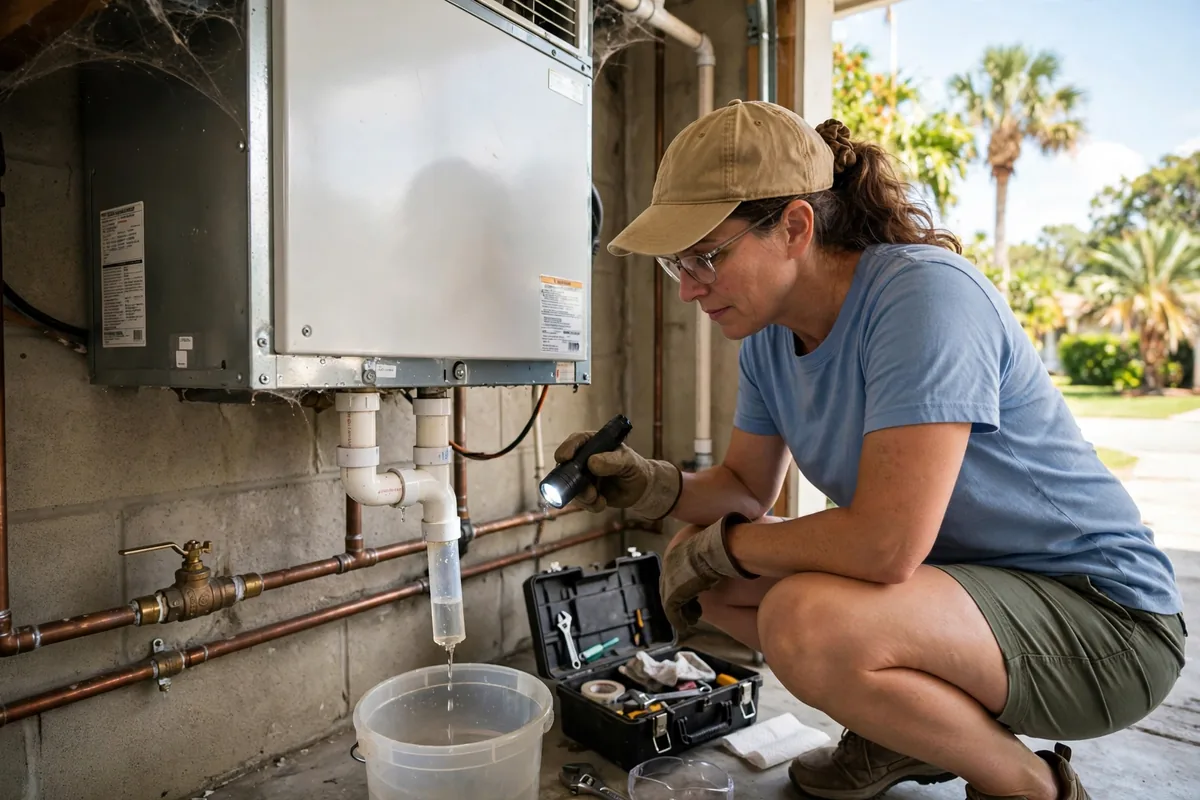
The plumbing checks that matter most are the ones with moving water under pressure: replace washing machine hoses on schedule, inspect supply lines under sinks, and replace a water heater, the tank appliance that heats household water, when it reaches old age rather than after it fails. A heater tank typically rusts from the inside, and when it lets go it can release its full contents at once.
Hoses and lines fail by age, not by drama. Rubber washing machine hoses should be replaced every few years or swapped for braided steel, and any hose that bulges, cracks, or rusts at its fittings is already on borrowed time. Pipe materials set the long-term risk: a copper pipe, a metal pipe used for water supply lines, can corrode and develop pinhole leaks over time; a galvanized steel pipe, a steel supply pipe coated with zinc common in older homes, rusts and narrows as its coating wears away; a cast iron drain pipe, the heavy iron pipe used for drains in many Florida homes built before the mid-1970s, rusts from the inside and can crack under a slab. Newer homes and repairs use PEX pipe, a flexible plastic pipe that resists corrosion better than metal, and PVC pipe, a white plastic pipe widely used for drain and vent lines. You do not need to re-pipe a house on a schedule — but in an older home, ask a plumber to assess the pipes at any major service visit, because a slab leak, a leak in a water pipe running under the home's concrete slab, found early is a repair, and found late is a restoration.
Shingles, Gutters And Drainage Before Storm Season
Before storm season, have shingles, flashing, and vents checked for lifting and cracks, and keep gutters and downspouts clear so water drains away instead of backing up under the shingle edge. Most storm leak damage inside homes is wind-driven rain, rain pushed by strong wind through edges, windows, doors, and wall joints, finding openings that a calm rain never tests.
The covering over your home works as a system: shingles shed water, flashing seals the joints, and drainage carries it away from the walls. Check where downspouts discharge — water dumped against the foundation soaks the slab edge and the wall base inside. After any major storm, walk the home with fresh eyes: a new ceiling stain, however small, is the covering telling you where it let water in, and a small roof leak repaired in a dry week is far cheaper than the same leak found after a season of hidden wetting. The Florida Division of Emergency Management, Florida’s state agency for storm preparation and recovery information, publishes seasonal preparation checklists that pair well with this one.
The Twice-A-Year Florida Prevention Checklist
Prevention works as a rhythm, so here is the whole checklist in one place — most of it takes an afternoon, twice a year. Work through it before the Atlantic hurricane season, the June 1 to November 30 period when tropical storms and hurricanes can affect Florida, and again in the fall.
- AC: condensate line cleared, drain pan checked, float switch tested.
- Laundry: washing machine hoses inspected for bulges and rust; replaced on schedule.
- Water heater: check the base for rust and moisture; note its age and plan replacement before failure.
- Under every sink: look and feel for drips, stains, and swollen cabinet bottoms.
- Shutoff: turn the main valve off and on once to confirm it still moves.
- Roof and gutters: clear debris, look for lifted shingles and stained ceilings below.
- Outside: downspouts discharge away from the walls; soil and mulch slope away from the slab.
- Alarms: consider simple water alarms under the heater tank, behind the washer, and under sinks — inexpensive battery devices that beep when they get wet.
A moisture meter, a handheld tool that measures how much water is inside wood, drywall, and other materials, is an optional extra: a quick reading at a suspect wall tells you whether a stain is history or an active leak. Keep the checklist with your storm documents so the habit survives busy years.
Know Your Shutoff Valve And Your Flood Zone
Prevention lowers the odds; knowledge limits the loss. Every adult in the home should know where the main water shutoff is — the valve that stops all water flowing into the home — and it should be labeled and reachable, because closing it in the first minutes is the fastest way to limit a leak.
Pair that with your flood zone. FEMA publishes flood maps for every Florida address, and knowing whether your home sits in a high-risk zone changes real decisions: what to store on the floor, whether flood insurance belongs in your budget, and how seriously to take a forecast. The U.S. EPA, the Environmental Protection Agency, makes the same point in its moisture guidance: controlling water is the key to preventing mold growth, colonies of mold that grow on wet materials and can start within 24 to 48 hours in Florida conditions.
And if water gets in anyway, act the same day. This site is a free referral service, not the contractor: one free call connects you with an independent local pro who can typically arrive in 30–60 minutes, find the source, and start drying before a leak becomes a mold problem. Prevention first — but speed is the backup plan that works.
Not Sure How Bad It Is?
One free call connects you with a local pro who can check it in person — typically within 30–60 minutes.
Related Guides
Smart Leak Detectors And Automatic Shutoff Systems
Guide — smart leak detectors and automatic shutoff
Hurricane Season: Prepare Your Home For Water Damage
Guide — hurricane season water damage preparation
Reviewed By Hamza
Role: CEO
Hamza is the CEO of this business. He is very expert in local business and has great experience.
Updated October 23, 2026
Sources
Water In Your Home Right Now?
One free call connects you with an independent local pro who can typically arrive in 30–60 minutes.
Free Call · Answered 24/7 · Local Pros Near You